

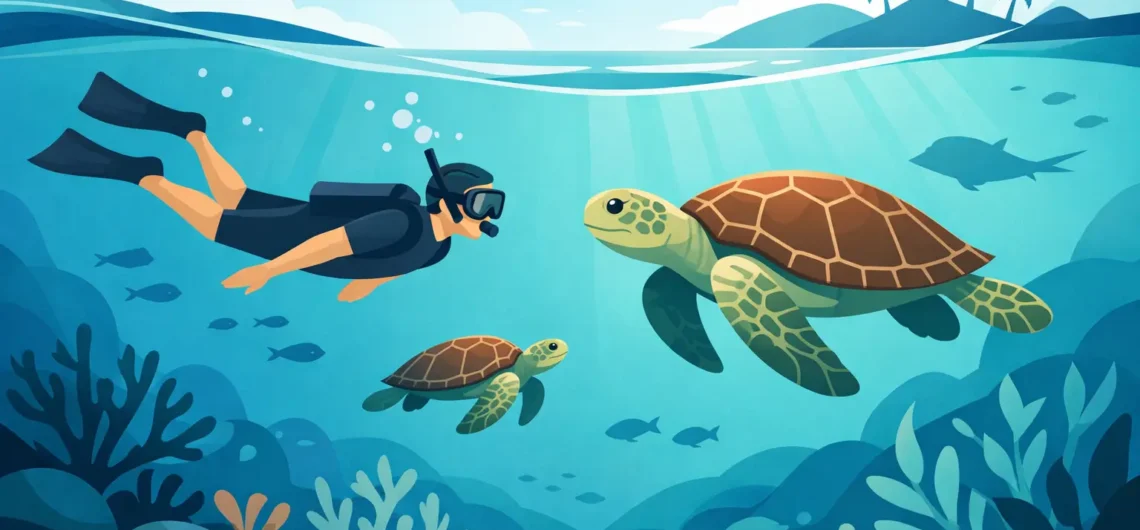
You spot the first turtle just offshore, calm and unbothered, gliding over the reef like it owns the place. That moment is exactly why so many visitors ask: is swimming with sea turtles safe? The short answer is yes, usually – if you choose the right location, respect the animal, and follow a few basic rules in the water.
In Curaçao, sea turtle swims are one of those bucket-list experiences that really do live up to the photos. But this is still a wildlife activity in open water, not a pool encounter. Safety depends on conditions, your comfort level in the ocean, and how the experience is managed.
Is swimming with sea turtles safe for most travelers?
For most healthy travelers, swimming with sea turtles is considered a low-risk activity when conditions are calm and the outing is organized well. Sea turtles are generally peaceful animals. They are not hunting people, they are not territorial in the way some marine life can be, and in places where they are commonly seen, they often continue feeding or surfacing without much drama.
That said, low risk does not mean zero risk. The main hazards usually have less to do with the turtle itself and more to do with the environment around it. Waves, currents, slippery shoreline entry points, boat traffic, sun exposure, and overconfidence in the water are much more common issues than any direct problem with a sea turtle.
This is why families, couples, cruise visitors, and first-time snorkelers can often enjoy the experience safely, but only when it matches their ability. A confident swimmer on a calm morning will have a very different experience from someone who gets anxious in deep water or has never used a mask before.
What are the real risks?
If you are wondering whether swimming with sea turtles is safe, it helps to separate movie-style fears from what actually happens. Sea turtles are wild animals, so they can react if they feel cornered, grabbed, or stressed. A startled turtle can move suddenly, scratch with a flipper, or try to bite. That is rare, but it is exactly why touching and chasing are never a good idea.
The bigger concern is usually the setting. Many turtle spots are near rocky coastlines or active snorkeling areas. Entry and exit can be tricky if the shore is uneven. If the water is choppy, even strong swimmers can get tired faster than expected. Snorkel gear that does not fit well can also create stress fast, especially for beginners.
There is also the visibility factor. Clear water makes everything easier. If visibility drops because of wind or surf, swimmers may lose track of where they are, drift farther than intended, or feel disoriented. Add heat, excitement, and a little vacation overconfidence, and small issues can turn into a rough experience.
When the turtle is not the problem
A lot of people picture the animal itself as the danger. In reality, sea turtles are often the calmest thing in the water. What matters more is whether you enter at a suitable beach, whether there is supervision or guidance, and whether you know your limits.
In Curaçao, popular turtle areas can be very accessible, which is great for visitors with limited time. But accessibility can create a false sense that it is effortless for everyone. Easy to reach does not always mean easy to manage if the sea is rough that day or if you are uncomfortable snorkeling.
That is where local guidance makes a big difference. An experienced island operator knows which locations are best in current conditions, what time of day is likely to be calmer, and when it is smarter to skip the swim than force it.
How to stay safe in the water
The best turtle swims look relaxed because the basics are handled well. Start with honest self-assessment. If you are not a strong swimmer, say so. If you are traveling with kids, older relatives, or anyone nervous in the ocean, plan around that from the beginning instead of figuring it out at the shoreline.
Good gear matters more than people think. A mask that leaks, fins that rub, or a snorkel you are not used to can distract you quickly. If flotation is available and you would feel better using it, take it. There is no prize for making the experience harder than it needs to be.
It also helps to keep your body position calm and horizontal in the water. Fast kicking, splashing, and sudden direction changes can tire you out and disturb the turtle. The goal is to float, observe, and let the animal move naturally.
Stay aware of where the shore, the reef, and other swimmers are at all times. If you find yourself focused only on getting close to the turtle, you can easily drift into a less comfortable area without noticing. Calm attention is a big part of ocean safety.
How close should you get?
This is where safety and respect overlap. The safest distance is one that allows the turtle to keep doing what it was already doing. If it is feeding, let it feed. If it is surfacing, give it room to breathe. If it changes course because of you, you are too close.
Trying to touch a turtle is not just bad for the animal. It can also create unnecessary risk for you. A turtle can react suddenly, and even a minor scratch in saltwater can ruin the fun. Keeping space is better for the wildlife and better for the overall experience.
The funny thing is, when swimmers stay calm and respectful, turtle encounters often feel more special. Instead of a rushed chase, you get a natural moment – the kind people remember long after the trip is over.
Is swimming with sea turtles safe for kids and beginners?
Often yes, but it depends on the child, the conditions, and the setup. Confident kids who are comfortable in the water may do very well in a calm, supervised turtle swim. Very young children, weak swimmers, or kids who panic with a mask on may need a different plan or a more controlled beach stop.
Beginners can absolutely enjoy this activity too, especially in Curaçao where some turtle experiences are beginner-friendly when the sea cooperates. The key is not to treat it like a guaranteed fit for everyone. A guided outing with clear instructions and realistic pacing is much better than trying to improvise on your own.
For cruise guests or visitors with a tight schedule, this matters even more. You want an excursion that feels smooth, not rushed. A well-planned experience gives you enough support to enjoy the wildlife without turning the day into a stress test.
What responsible operators do differently
A quality excursion does not just get you to a famous spot. It creates the conditions for a better and safer experience. That means paying attention to weather, avoiding overcrowded timing when possible, explaining how to behave around wildlife, and adjusting for the group in front of them.
This is one reason many travelers prefer booking with a local company instead of guessing their way through it. Curaçao Dreams Travel, for example, builds experiences around safe and high-quality excursions, which is exactly what turtle swims need. Local knowledge is not a marketing extra here – it can be the difference between a smooth morning in calm water and showing up to a shoreline that is wrong for your group.
A responsible operator will also be honest when conditions are not ideal. That is a good sign, not a disappointment. In wildlife experiences, flexibility is part of quality.
A few situations where the answer is no
Sometimes the right answer to is swimming with sea turtles safe is simply not today. If there are strong currents, rough surf, poor visibility, or heavy boat activity, it may not be the right time to get in. The same goes if you are sick, extremely tired, sun-drained, or not comfortable putting your face in the water.
It may also be a no for travelers with certain medical concerns unless they have cleared it beforehand. If you have breathing issues, mobility limitations, or a history of panic in open water, think through the experience honestly before booking.
Skipping a turtle swim under the wrong conditions is not missing out. It is smart travel.
The best mindset for a great turtle encounter
Think of the experience as a wildlife observation, not an animal interaction. That one shift changes everything. You stop trying to control the moment, and you become more aware of your own safety, the turtle’s space, and the natural rhythm of the water.
That is usually when the experience becomes its best version – easy, memorable, and very Curaçao. Warm water, clear views, and the thrill of seeing a sea turtle in its own environment can be incredibly special when done the right way.
If you choose a calm day, a suitable location, and a team that knows the island well, the answer is often yes, swimming with sea turtles is safe. The smartest plan is simple: respect the ocean, respect the animal, and give yourself the kind of setup that lets the experience stay fun from start to finish.